You know those incredible wildlife photographs you see on Facebook? A perfectly sharp bird, beautiful background, amazing details.
You look at them, appreciate the photograph, and scroll to the next one.
But have you ever wondered what actually goes into capturing a single image like that?
I thought I understood wildlife photography. After all, I’ve been working with cameras for years.
But spending nearly eight hours waiting for one bird at Hazarikhil Wildlife Sanctuary gave me a completely different appreciation for the people who do this regularly.
And the funniest part?
After all that waiting, I almost went home without the photograph.
The Journey to Hazarikhil
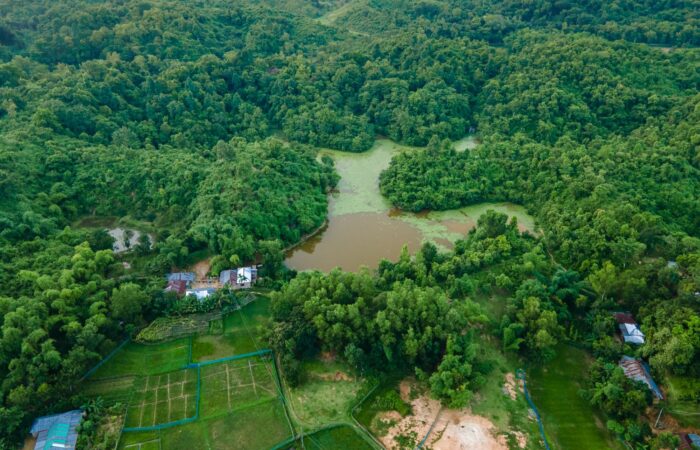
Our destination was Hazarikhil Wildlife Sanctuary in Fatikchhari, Chattogram, Bangladesh.
I traveled from Sylhet to join a group of experienced wildlife photographers. We also had a local guide, Rupon Bhai, who knew the forest and its wildlife.
The journey didn’t go entirely according to plan. Our bus was delayed, so things were already running behind schedule.
But the real challenge was still ahead.
Our target was the Grey Peacock-Pheasant, locally known as Kath-moyur (কাঠময়ূর).
It’s a shy forest bird, and getting a good photograph of one isn’t exactly easy.
We entered the forest and eventually settled near a small stream, locally called a jhiri.
I really liked the natural sound of the flowing water. It’s one of those things you don’t get to appreciate properly when you’re rushing around.
We had already encountered a Jungle Fowl earlier in the day, but our main target was still somewhere inside the forest.
And then the waiting began.
Wildlife Photography Is Mostly Waiting
Here’s something that doesn’t come across when you look at a finished wildlife photograph.
You might spend hours sitting in the same position without taking a single useful shot.
That’s exactly what happened to us.
We set up our cameras and tripods beside the stream, hoping the bird would eventually appear.
We could hear its calls, so we knew it was somewhere nearby.
But hearing a bird and actually getting a clear photograph of it are two very different things.
Minutes turned into hours.
And hours turned into more hours.
Sitting with heavy camera equipment, trying to remain alert, and constantly expecting something to happen becomes physically exhausting.
My arms and legs were hurting.
At some point, I started thinking about all those beautiful wildlife photographs people share online.
How much patience does it take to capture them?
How many hours do photographers spend waiting in uncomfortable positions?
How many times do they return home without getting the shot they wanted?
I was beginning to understand.
Eight Hours Later, the Bird Finally Appeared
After all that waiting, the moment finally came.
The Kath-moyur appeared.
For about one or two seconds.
And I missed it.
Yes. After spending almost the entire day preparing for that exact moment, I couldn’t get the shot.
Imagine sitting there for hours, keeping your camera ready, adjusting your focus, watching the same spot, and waiting for a bird that might or might not show up.
Then, when it finally appears, everything happens too quickly.
Gone.
I was frustrated.
Really frustrated.
And naturally, I started complaining about my expensive camera.
What’s the point of having a camera worth lakhs of taka if I can’t even capture the bird I’ve been waiting for all day?
Of course, deep down, I knew the camera wasn’t really the problem.
Wildlife doesn’t wait for you to fix your composition or adjust your tripod.
The moment happens when it happens.
And sometimes, you’re simply not fast enough.
The Second Chance I Didn’t Expect
Here’s where the day took an unexpected turn.
Just a few minutes after disappearing, the bird returned.
Even our guide was surprised.
Apparently, an immediate return like that wasn’t something we should have expected.
But this time, I was ready.
And I finally got the photograph.
After hours of waiting, missing the first opportunity, and almost giving up hope, that one image suddenly made the entire experience feel different.
It’s difficult to explain how satisfying that moment was.
Not because it was technically the greatest photograph I’d ever taken.
But because of everything that happened before I pressed the shutter.
I think that’s something special about wildlife photography.
Sometimes the story behind a photograph means just as much to the photographer as the photograph itself.
Something Interesting I Learned About Forest Birds
There was another observation from this trip that I found fascinating.
While spending so much time beside the stream, I started noticing how some birds approached the water to bathe.
What surprised me was how consistent their movements appeared to be.
A bird would approach from a particular branch, move down through a familiar spot, and enter the water.
Then, when it returned, it seemed to follow almost the same route.
The same branch. The same path. The same bathing spot.
I found it fascinating.
Of course, this was an observation from our time in the field, not a scientific conclusion that every bird always behaves this way.
But it made me realize how much there is to learn simply by watching wildlife carefully.
When you’re constantly moving around looking for your next photograph, you can miss these little details.
Sometimes sitting quietly in one place teaches you more than walking around for hours.
A Different Kind of Respect for Wildlife Photographers
By the end of the day, I was physically exhausted.
And I had developed a much deeper respect for the photographers who spend their time documenting wildlife.
People usually see the results.
They don’t see the long journeys, early starts, uncomfortable waiting positions, aching muscles, missed opportunities, or days when nothing works out.
A beautiful wildlife photograph might take a fraction of a second to capture.
But the effort behind it can take hours, days, or even longer.
Expensive equipment can help. A good camera, a sharp telephoto lens, and a reliable tripod certainly make a difference.
But none of them can replace patience, observation, field knowledge, and the ability to stay ready.
And sometimes, you need a little luck too.
I definitely needed some that day.
Was It Worth the Eight Hours?
For me, yes.
Not just because I eventually photographed the Kath-moyur.
I got to spend time with experienced wildlife photographers, observe how they work, learn from our guide, and understand a little more about what happens behind those incredible photographs we admire.
And I got a story I’ll probably remember every time I look at that particular image.
The next time you see a beautiful wildlife photograph, take a moment to think about what might have happened before the photographer captured it.
Because sometimes, behind a single frame, there’s an entire day of waiting.
And sometimes, even after doing everything you can, the bird has to give you a second chance.
Watch the Full Hazarikhil Wildlife Photography Experience
I documented the entire experience in a 17-minute video—from the journey and the long wait to the frustrating missed opportunity and the unexpected second chance.
If you’re interested in wildlife photography or curious about what actually happens behind the scenes, you can watch it here.
— AsadSnapper