The boats seemed to fill the Jadukata River.
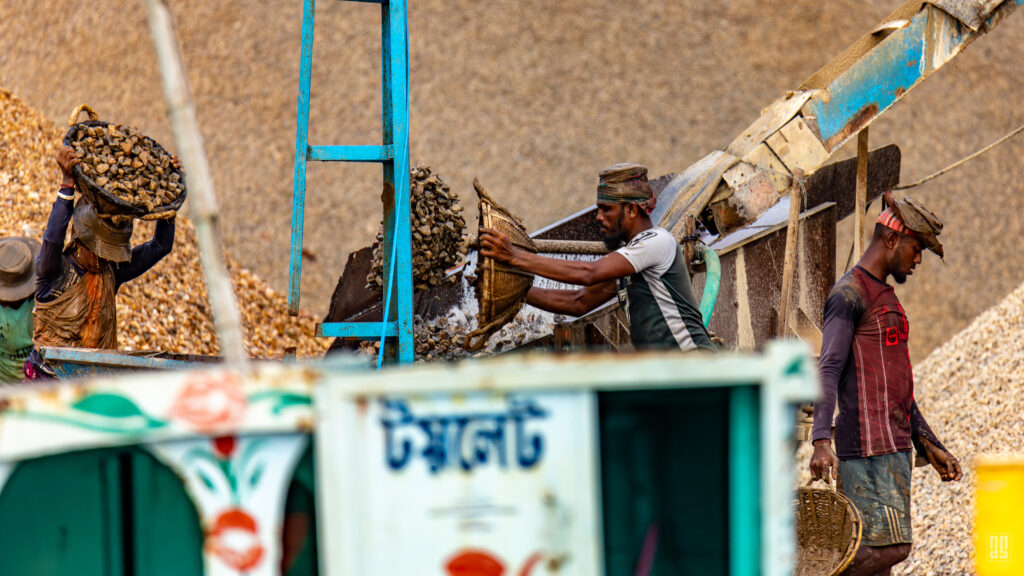
From where I stood, I could see them working together around the sand port—wooden boats, working hands, stone, coal, sand, and people carrying the weight of another hot day. I had come to photograph the open water and familiar beauty of Tanguar Haor. But this was the frame that held me: not a postcard, but a living landscape shaped by labour.
Returning to Tanguar Haor in August 2026
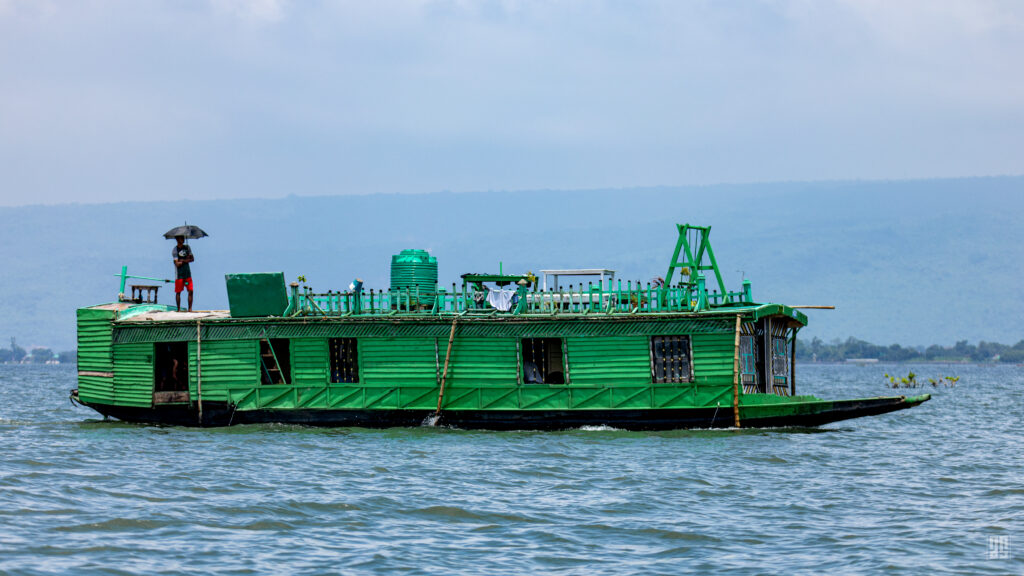
The journey began in Sylhet. We travelled to Sunamganj and then continued to Anwar Ghat, where we boarded a houseboat for two days and one night on the haor.
Shanin, Liton, Lal Bhai, and several other friends were with me. I carried more than I would normally want to carry in the August heat: my Canon R5 Mark II, Tamron 150–600mm G2, Canon 50mm f/1.4, DJI Mavic 3 Classic, DJI Action 5 Pro, and DJI Mic Mini. Each piece had a purpose. The long lens allowed me to observe life without stepping too close. The 50mm helped with the more human moments. The drone revealed the scale of the water, boats, and land in a way that could not be seen from the deck.
Tanguar Haor has long been one of my favourite places in Bangladesh. I have returned many times over the years. That familiarity made this visit more difficult than I expected.
The Houseboat Was Not What We Were Shown
Before the trip, we had been shown photographs of the houseboat. When we arrived, the boat waiting for us looked very different. It was old and worn, far from the impression created by those pictures.
That first disappointment could easily have defined the journey. It did not. The staff treated us well, and their kindness mattered. Travel rarely follows the picture we make of it beforehand. Sometimes the people we meet rescue an experience that the arrangements have failed.
The heat was intense. The crowds and constant noise followed us across places where I remembered more space and silence. Tourist boats moved through the water, and the signs of careless travel—plastic and other rubbish—were hard to overlook.
I was not seeing only change. I was seeing pressure.
A Night of Baul and Folk Songs on the Water
After dark, the mood changed.
Lal Bhai is a Baul singer. That night, surrounded by water, he sang songs by Shah Abdul Karim and Hason Raja, songs by Pagol Hasan, and some of his own original music. The old boat, the noise of the day, and the discomfort of the heat briefly moved to the background.
There is something different about hearing folk music in a place where the landscape belongs to the same cultural memory as the songs. The sound travelled beyond the boat into the darkness. We listened together, friends sharing a night that had not turned out as planned but had become memorable in another way.
The DJI Mic Mini was in my bag as part of the recording kit, but no equipment could fully hold the feeling of that hour. Some moments remain larger than the files we bring home.
Childhood on the Water at Tanguar Haor
The next morning gave me one of the quietest scenes of the trip.
A small boy went out to fish with his father in a little boat. For them, this was not a travel experience or a photographic subject. It was simply the beginning of the day’s work.
Elsewhere, boys moved freely in small boats, crossed the water on their own, and jumped in to swim. Their confidence came from growing up with the haor. What would feel adventurous to a visitor was ordinary life to them.
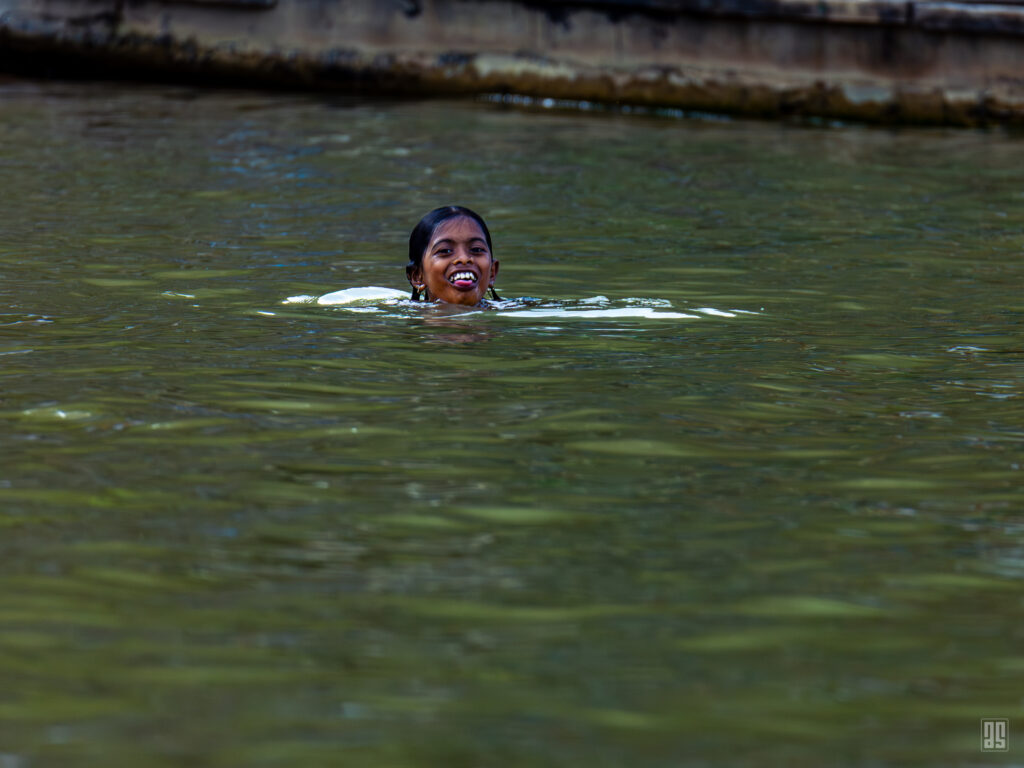
I am always drawn to the lives of people around Tanguar Haor. Their struggle does not make me feel pity. It gives me strength. I see how much physical work is required for ordinary survival and how naturally people continue—with skill, humour, family, and community.
Boats and Labour Along the Jadukata River
At the Jadukata River, the scale of that work became impossible to miss.
Many boats gathered around the sand port while people worked with coal, stone, and sand. The labour was exhausting even to watch. Under the heat, every loaded boat and every repeated movement carried the reality of how livelihoods are made here.
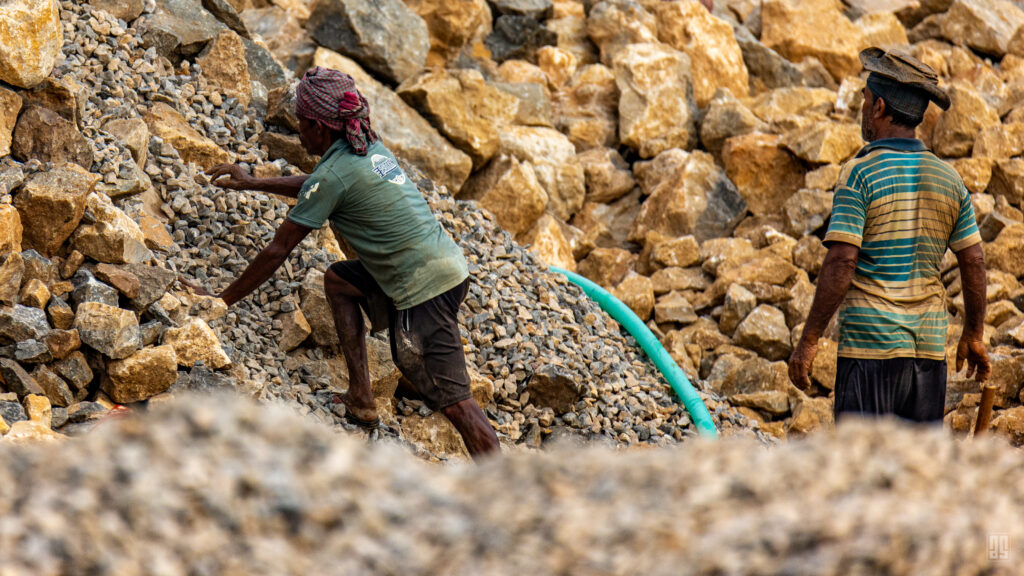
This became my strongest photographic scene from the trip. The pattern of the boats first caught my eye, but the image was never only about shape or composition. It was about coordinated labour—the river functioning as a road, workplace, and source of survival at the same time.
I photographed from a respectful distance. Documentary photography asks for more than a technically good frame. It asks us to remember that the people inside the image are living their own lives, not performing for our cameras.
Why I Stayed on the Boat at Shimul Garden
Our route included the main haor, the watch tower, Niladri, the Jadukata River, and Shimul Garden. When the group went ashore at Shimul Garden, I remained on the boat.
I did not stay because I was tired or uninterested. I stayed because I did not want to see the condition of another place I loved.
There are times when a photographer feels compelled to look directly at change. There are also times when looking feels like losing something twice—first in reality, and then again inside yourself. I watched from the boat while the others went ahead.
Perhaps I will return and face it properly another day. On this trip, I could not.
Photographing Beauty Without Hiding the Pressure
Tanguar Haor is still extraordinary. Water and sky continue to meet across a horizon that can make a person feel very small. From above, the DJI Mavic 3 Classic showed patterns that were invisible at water level. Through the Canon R5 Mark II, I could isolate a working boat, a child’s movement, or a face against the wide landscape.
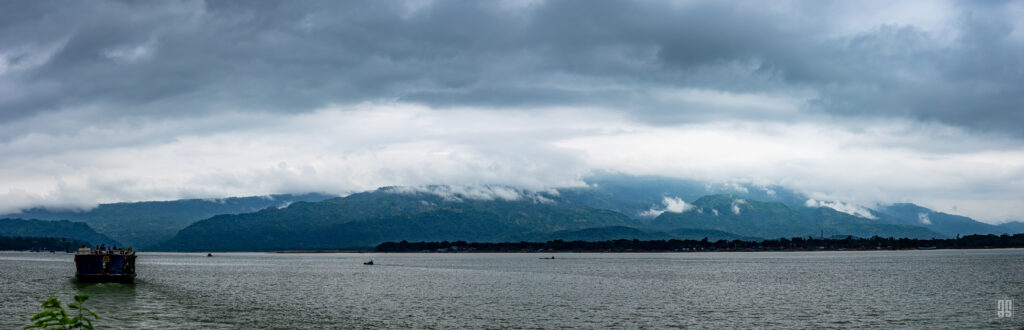
But beautiful photography can become dishonest when it removes every sign of pressure. I did not want these photographs to pretend the haor was untouched. The crowds, noise, pollution, tourism, and hard labour all belonged to the story of this visit.
The challenge was to photograph with affection without turning that affection into blindness.
Field Kit
- People, boats, and distant details: Canon R5 Mark II with Tamron 150–600mm G2
- Environmental portraits: Canon R5 Mark II with Canon 50mm f/1.4
- Aerial landscapes: DJI Mavic 3 Classic
- Travel footage: DJI Action 5 Pro
- Field audio: DJI Mic Mini
What Tanguar Haor Gave Me This Time
I returned from the trip with photographs, video, and mixed feelings.
I was saddened by what careless tourism and growing pressure are doing to a place I love. I was frustrated by the houseboat experience. I was exhausted by the heat, crowds, and noise.
Yet I also returned with the image of a boy fishing beside his father, children completely at home in the water, working boats gathered on the Jadukata, and Lal Bhai’s voice carrying folk songs into the night.
The people of the haor reminded me again that strength is often quiet. It rows before sunrise. It works under an unforgiving sun. It sings after a difficult day.
That is the Tanguar Haor I wanted to keep in these photographs—not only a beautiful destination, but a place where water, work, memory, and human courage continue to meet.
Explore the complete Tanguar Haor photography collection. If one of these photographs stays with you, you can also visit the AsadSnapper shop to support more stories from the landscapes and communities of Bangladesh.