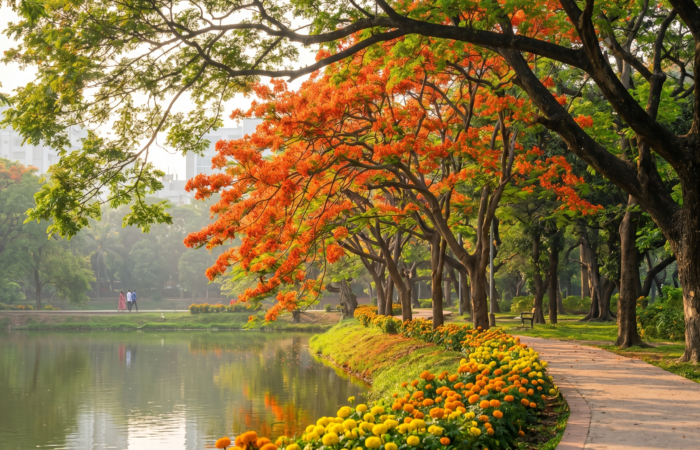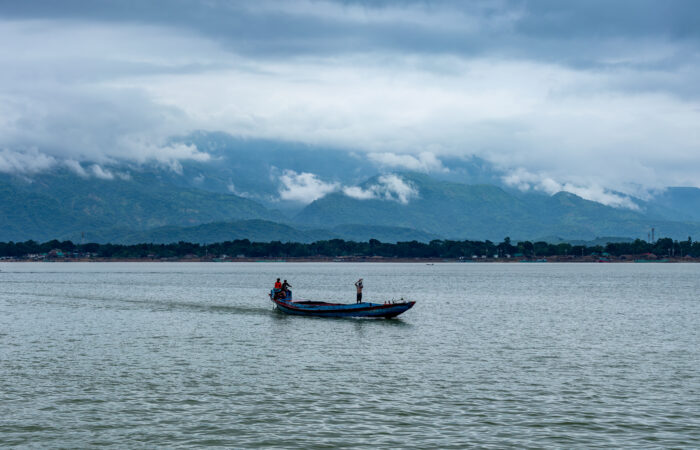
Bangladesh is a country shaped by its rivers. For generations, these waterways have been part of how people travel, work, trade, celebrate, and connect with one another.
And somewhere along those rivers, a beautiful tradition continues to bring entire communities together.
We call it Nouka Baich (নৌকা বাইচ) — the traditional boat race of Bangladesh.
At first glance, it might seem like a simple competition between teams of rowers. But spend some time understanding the tradition, and you’ll realize it’s about much more than which boat crosses the finish line first.
It’s about community, pride, celebration, and a connection to our rivers that goes back generations.
While working on my documentary about traditional boat racing in Sylhet, I wanted to explore that side of the story.
Because for the people who grow up around these rivers, Nouka Baich isn’t just a sporting event. It’s part of their cultural identity.
A Tradition Born Along the Rivers
The history of Nouka Baich goes back a long way.
One commonly told account connects organized boat racing in Bengal with the Zamindars, or landlords, who arranged competitions for entertainment during the British colonial period.
Over time, these races became popular community celebrations, bringing together boatmen, villages, and spectators.
The tradition, however, belongs to a much broader river culture, and its precise origins are difficult to establish.
In Sylhet, rivers such as the Surma, Kushiyara, Piyain, and Dholai are deeply connected to the lives of surrounding communities.
During the monsoon, when the rivers are full of water, they become natural gathering places for boat races.
Places such as Gowainghat, Badaghat, Balaganj, and Fenchuganj are among the areas associated with this tradition.
And when a race takes place, the river becomes much more than a waterway. It becomes a place where people come together to celebrate.
The Boatmen Who Carry Their Village’s Pride
One of the things I find most interesting about Nouka Baich is the spirit of the people participating in it.
Imagine a long, narrow racing boat moving through the water, with rowers working together in perfect rhythm.
Every stroke matters.
The team has to move almost like a single person. One missed beat can affect the entire boat.
But the competition isn’t just about physical strength or rowing technique.
For many participants, it’s also about representing their community.
A boat might carry the hopes of a village, the reputation of a team, and the pride of everyone standing along the riverbank cheering them on.
That’s why, in my documentary, I described the boatmen as warriors.
Not because they are fighting a battle, but because of the determination, discipline, and collective pride they bring to the race.
They’re not simply racing against another boat. They’re racing for something that means a great deal to the people supporting them.
The Festival Beyond the Finish Line
The race itself is only one part of Nouka Baich.
Another part I wanted to highlight in my documentary is the atmosphere surrounding it.
For local communities, a boat race can feel like a festival.
People gather along the riverbanks. Families come to watch. Friends meet, conversations fill the air, and crowds cheer as the boats approach.
There are often temporary markets and small rural fairs, locally known as melas.
Traditional foods, sweets, jhalmuri, khichuri, and halwa add to the celebrations.
It’s not difficult to understand why some people describe the occasion as being as joyful as Eid.
And I think this is one of the most important aspects of our traditional festivals. They give people a reason to come together.
In a world where so much of our entertainment happens individually through screens, these gatherings remind us of the value of sharing an experience with other people.
A boat race doesn’t require a stadium filled with expensive equipment or sophisticated technology. It needs a river, boats, skilled rowers, and people who care enough to participate.
Yet it can create an atmosphere that stays with a community long after the race is over.
What Happens When Traditions Slowly Disappear?
This is something I’ve been thinking about.
We’re living in a time when entertainment, communication, and even our social relationships are changing incredibly fast.
Most of us spend a significant part of our lives in the digital world.
There’s nothing inherently wrong with that. I work with cameras, computers, technology, and digital media myself.
But sometimes I wonder whether we’re paying enough attention to the traditions that helped shape our communities.
Nouka Baich is one example.
These events require people to organize, participate, and pass knowledge from one generation to another.
If that participation gradually disappears, preserving the tradition becomes much more difficult.
I don’t want to suggest that Nouka Baich has already disappeared or that technology alone is responsible for changes in rural culture. The reality is more complicated.
But I do think we should be asking ourselves an important question:
Will the next generation experience these traditions for themselves, or will they know them only through old photographs and videos?
For me, that’s a question worth thinking about.
Why I Wanted to Document Nouka Baich
As a photographer and filmmaker, I’m naturally interested in beautiful visuals.
And Nouka Baich offers plenty of them.
The movement of the boats, the rhythm of the oars, the energy of the participants, and the atmosphere around the river can all make powerful visual stories.
But I don’t think documentation should stop at creating beautiful footage.
A photograph or a film can also become a record of something that matters to a community.
Years from now, someone watching a documentary about Nouka Baich should be able to understand more than what the boats looked like.
They should get a sense of why people gathered, what the race meant to the participants, and why the tradition was important.
That’s what I wanted this documentary to communicate.
It’s a short film, just over four minutes long, but the subject carries a much bigger story.
And I believe stories like this deserve to be told.
Keeping the Tradition Alive
One encouraging aspect of Nouka Baich in Sylhet is that there are still people who care about organizing and participating in these events.
Local communities, younger generations, and public institutions can all play a role in keeping the tradition alive.
As photographers and filmmakers, we can contribute in our own way.
We can document the races, record the stories of the participants, share the cultural background, and help more people discover these events.
But documentation alone isn’t preservation.
Traditions survive when people continue practicing them. When young people learn about them, when communities organize events, and when the knowledge passes naturally from one generation to the next.
I hope Nouka Baich continues to be something people experience in person, not just something they remember from the past.
A Culture Worth Remembering — and Experiencing
To me, Nouka Baich represents something special about Bangladesh.
It reminds us that our rivers are more than geographical features. They’ve shaped our communities, traditions, and ways of life.
And the people who race these boats are carrying more than oars. They’re carrying a tradition that deserves our attention.
As someone who loves exploring and documenting Bangladesh, I want to see more of these stories preserved, shared, and celebrated.
Not because everything from the past needs to remain unchanged, but because some traditions still have an important place in our present.
Nouka Baich shouldn’t become just another memory of rural Bangladesh. It deserves to remain part of our living culture.
Watch My Documentary: Traditional Boat Racing in Sylhet
I made a short documentary exploring the history, cultural significance, and festive atmosphere of Nouka Baich in Sylhet.
— AsadSnapper